- Role
- Frontend Developer
- Period
- 2022 - 2024
Private Build
Under NDA. The numbers are real, and I'm happy to walk through the product on a call.
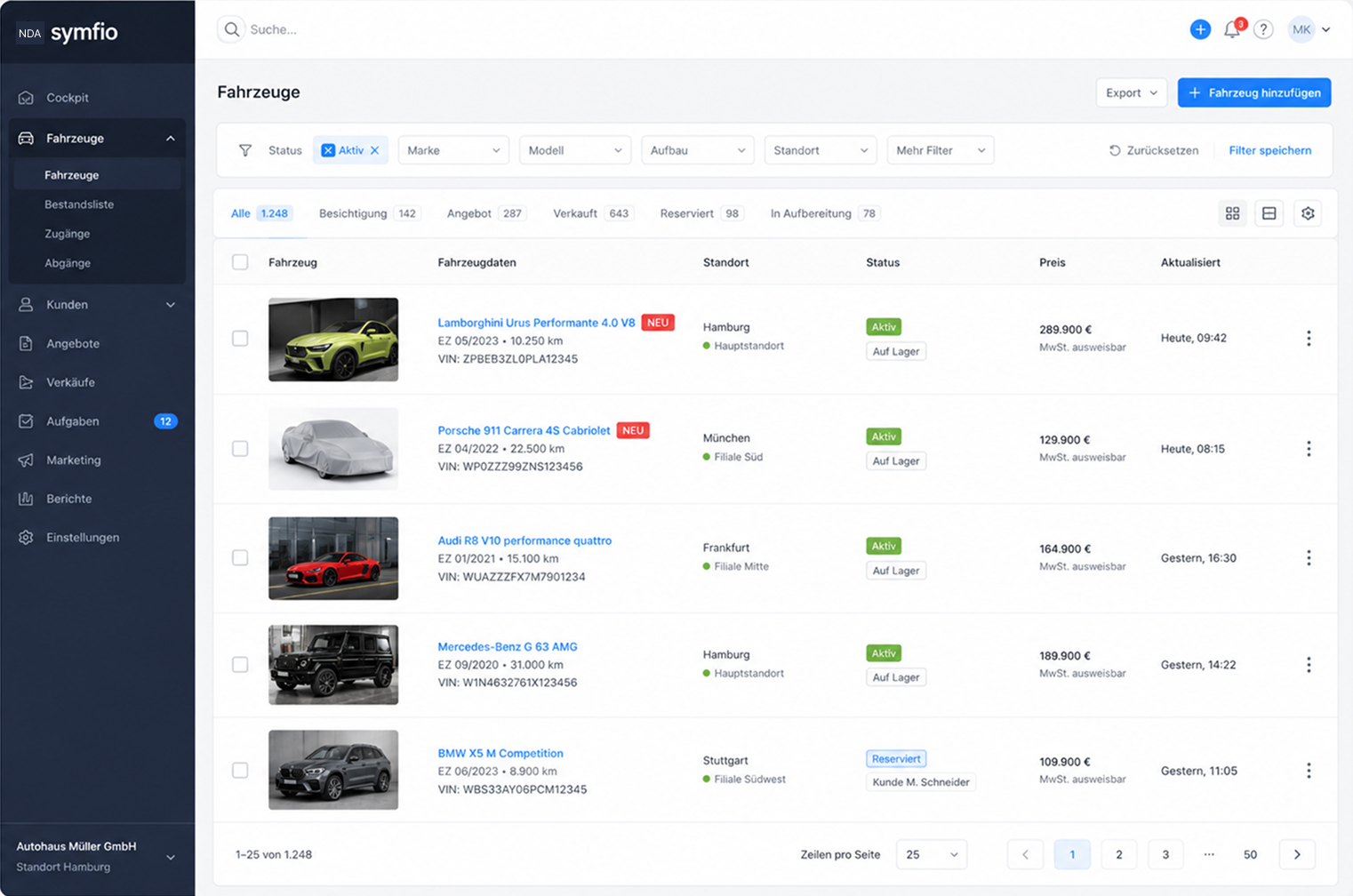
An internal dealership platform with dense dashboards, large tables, and complex form flows tuned for staff who manage leads, inventory, deals, and reports all day.
StackReact, TypeScript, React Hook Form
Workflows, one tool
Customers, vehicles, meetings and follow-ups: the whole dealership day in one internal tool, not five disconnected tabs.
A dashboard each manager arranges
Drag-and-drop widgets with layout constraints, so every manager shapes their own workspace without breaking the admin around it.
What I built
Frontend for the daily grind of a dealership: the customer lifecycle, long vehicle forms, and a dashboard managers can arrange themselves.
Customer management
Create / edit forms
Interaction history
Meetings & follow-ups
Vehicle forms
Form validation
Dashboard widgets
REST integration
What staff needed from it
- Users
- Dealership staff in the tool all day: speed and predictability over flash.
- Forms
- Long vehicle records: many fields, nested sections, conditional logic.
- Workflows
- Customers, vehicles, meetings and follow-ups in one place, without jumping between systems.
The problem
How I approached it
01
Forms
02
Lifecycle
03
Daily surface
04
Dashboard
How it helped
- Managers could run the whole customer lifecycle inside one interface.
- Each manager tuned their own dashboard from widgets.
What I chose (and what I didn't)
- Reusable form primitives
- Shared blocks over React Hook Form instead of bespoke forms per screen: one source of truth for validation.
- Explicit states everywhere
- Loading, error and save states on every action instead of silent failure. Staff always know what happened.
- Plugin dashboard
- Drag-and-drop widgets in isolation with layout constraints: a manager moves them around without touching the rest of the admin.
Tech stack
ReactTypeScriptReact Hook FormDrag & DropREST APIReusable UI